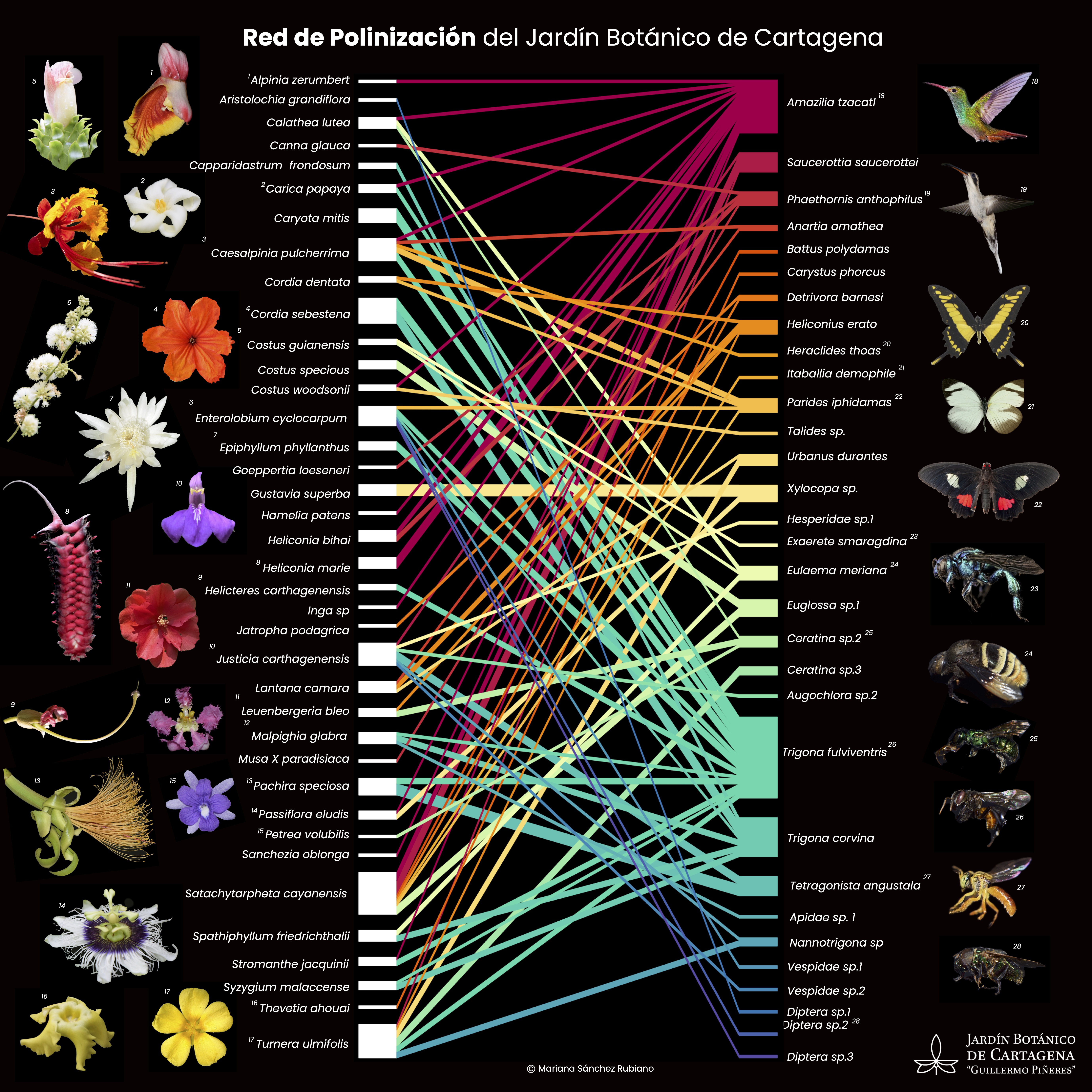
The Seasonal Dry Tropical Forest is one of the most threatened and biodiverse ecosystems in Colombia, where numerous flowering plants depend on pollinators for their reproduction. These organisms play a fundamental role in ecosystem functioning by enabling fruit and seed production, sustaining ecological networks, and contributing to forest regeneration. In addition, pollinators are essential for food security, as they are involved in the production of a large proportion of the crops we consume.
Bees
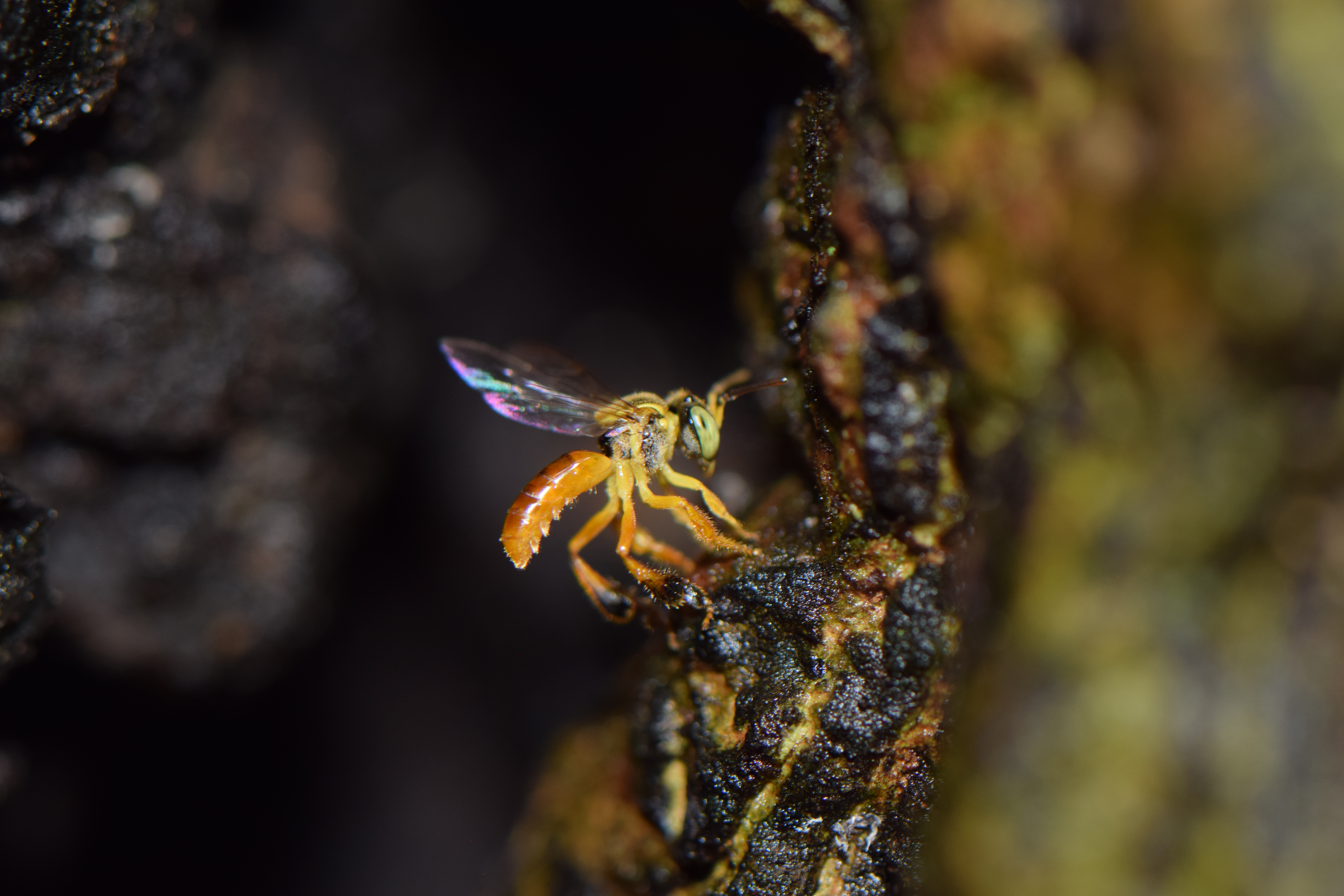
Bees constitute the most abundant and diverse group of pollinators recorded in the Botanical Garden. In particular, native stingless bees—such as Trigona fulviventris, Trigona corvina, and Tetragonisca angustula—are the main protagonists of the pollination network operating within the garden. These species act as generalist pollinators, visiting a wide variety of flowers and ensuring the reproduction of most flowering plants.
Many bees, especially solitary species, forage on flowers in search of pollen, which they collect and pack into specialized structures on their hind legs called corbiculae. This pollen is transported to their nests to feed their offspring and, during this process, is transferred from flower to flower, enabling plant fertilization and reproduction.

Hummingbirds
Hummingbirds are frequent pollinators in garden collections dominated by brightly colored, nectar-rich flowers, as they require high concentrations of glucose to meet their elevated energetic demands. Species such as the Rufous-tailed Hummingbird (Amazilia tzacatl) and the Straight-billed Hermit (Phaethornis anthophilus) are among the most commonly recorded in the Botanical Garden.
Like many birds, hummingbirds show peaks of activity during the early morning hours and before sunset, when they carry out their foraging routes. During these periods, they can be observed visiting heliconias (Heliconia mariae), peacock flowers (Caesalpinia pulcherrima), and verbenas (Stachytarpheta), actively contributing to the pollination of these and other plant species in the garden.
Bumblebees
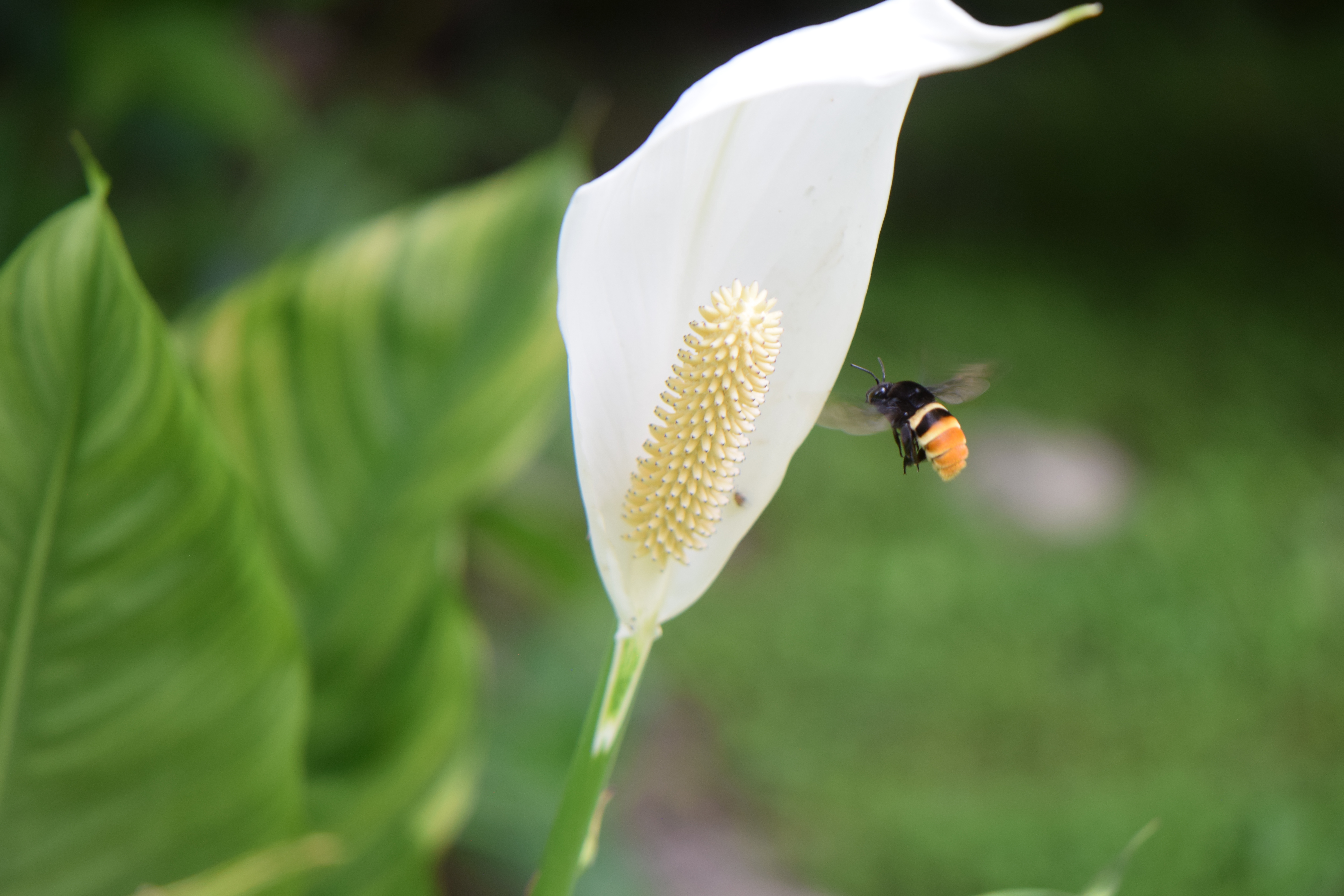
Species such as the carpenter bee Xylocopa frontalis actively forage in search of pollen, contributing to the pollination of various flowering plants. They are considered solitary bees, as each female is responsible for caring for her own offspring. However, they often exhibit gregarious behavior, building their nests in close proximity to one another in suitable wooden substrates.
Other large bees, such as Eulaema meriana, as well as bees of the genus Euglossa, specialize in collecting floral fragrances, particularly from orchids. These compounds are used by males during courtship displays to attract suitable mates. Due to their size and strength, these bees tend to visit large, aromatic flowers capable of withstanding their characteristic and powerful buzzing, thereby facilitating pollen transfer.
Butterflies
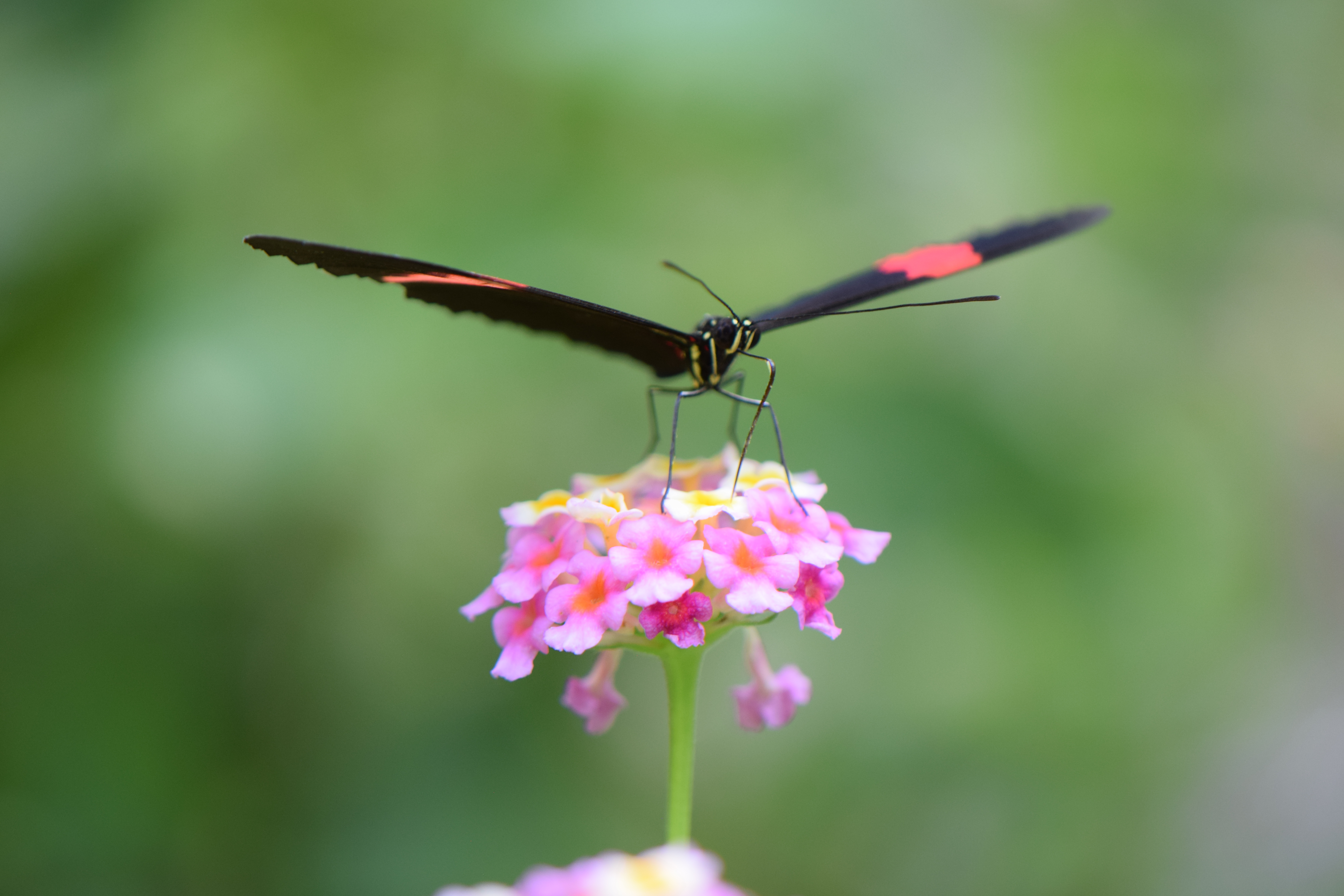
Butterflies are diurnal pollinators characterized by slow flight and a close association with flowers that have open floral structures. Unlike bees, butterflies do not actively collect pollen but instead transport it incidentally while feeding on nectar using their elongated proboscis.
At the Guillermo Piñeres Botanical Garden (JBGP), these species are commonly observed in the Pollinators’ Garden, where Heliconius erato, Parides iphidamas, and Itaballia demophile have been recorded. In this area, they are frequently seen visiting flowers such as peacock flower (Caesalpinia pulcherrima), verbena (Stachytarpheta), lantana (Lantana camara), and Justicia carthagenensis. These plants offer brightly colored flowers with accessible corollas and a constant supply of nectar.
Other Pollinators
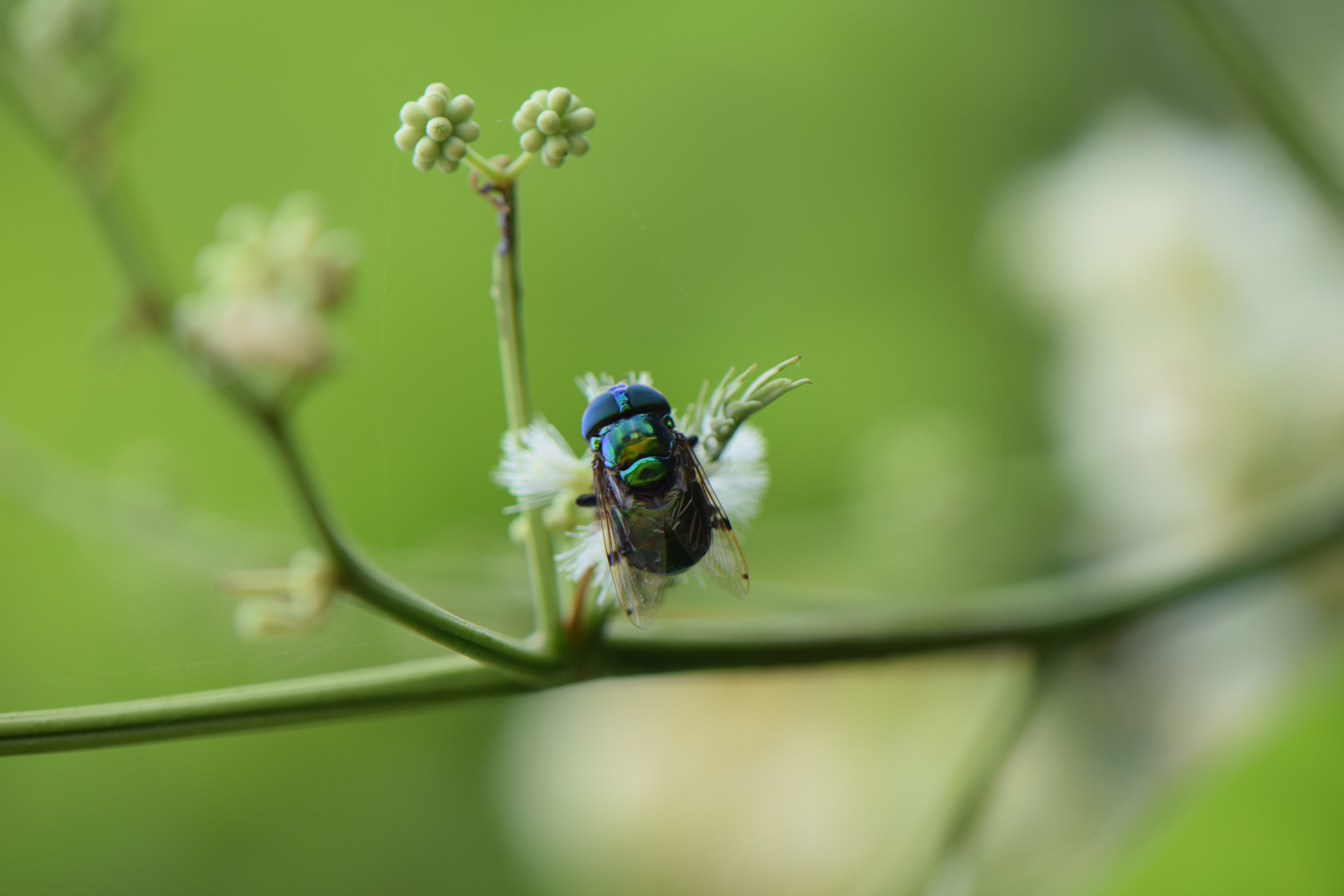
In addition to the most popular pollinator, there are other less conspicuous organisms that play a fundamental role in pollination. These include flies, such as flies and hoverflies, which visit small, open flowers in search of nectar and pollen and efficiently contribute to pollen transfer. Likewise, nocturnal pollinators such as moths and bats perform key functions by visiting flowers that open at night, typically light-colored, strongly scented, and rich in nectar. Although they often go unnoticed, these pollinators broaden the diversity of interactions within the garden.
The Network at The Garden